Using full potential of heavy machinery to complete complex tasks autonomously. Control the “Leader” and “Follower” robots or spectate a real-time operation in an intuitive app experience.
00
problem
Heavy industrial automation faces several challenges, particularly in environments requiring real-time decision making, adaptability and precision. Current robotic solutions struggled with navigating dynamic spaces while avoiding obstacles, adapting to unexpected environmental changes and providing an intuitive user experience for operators. The goal was to design a robotics system that could operate autonomously, efficiently integrate with human workflows and offer a seamless way for machine operators to control from anywhere.
solution
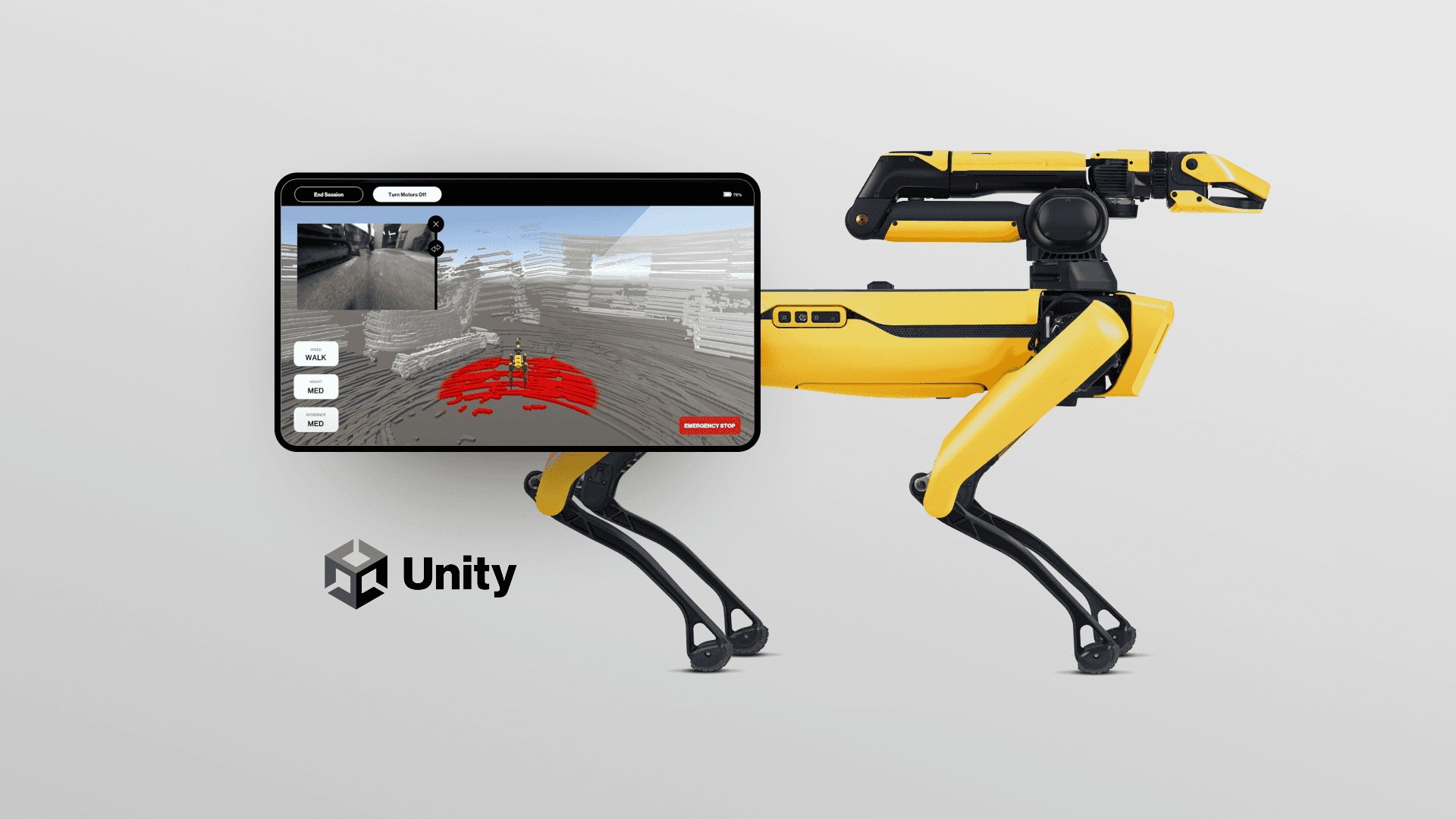
As a team, we simplified our goal to view our product as an intelligent “follow-the-leader” system for robots. An initial robot (Boston Dynamics Spot Robot Dog) equipped with advanced sensor tech would explore an unknown area, providing real time footage and digital mapping. Once this lead robot sets a path, a separate follower robot or any type of heavy machinery would autonomously run tasks along the path. With both robots equipped with AI and machine learning, the machinery can adapt to different environments and tasks, allowing safer execution in industrial projects. With an intuitive interface, the controls, environment mapping and real-time positioning are presented in either a Leader, Follower or Spectator experience that provides complete control of heavy industry worksites.
My role
As Design Lead, I was involved in early strategy envisioning sessions with our Program Manager, Technical Engineering and Development teams to craft this product experience. As sole Designer, I took ownership of UX, research and visual design and direction.
Overview
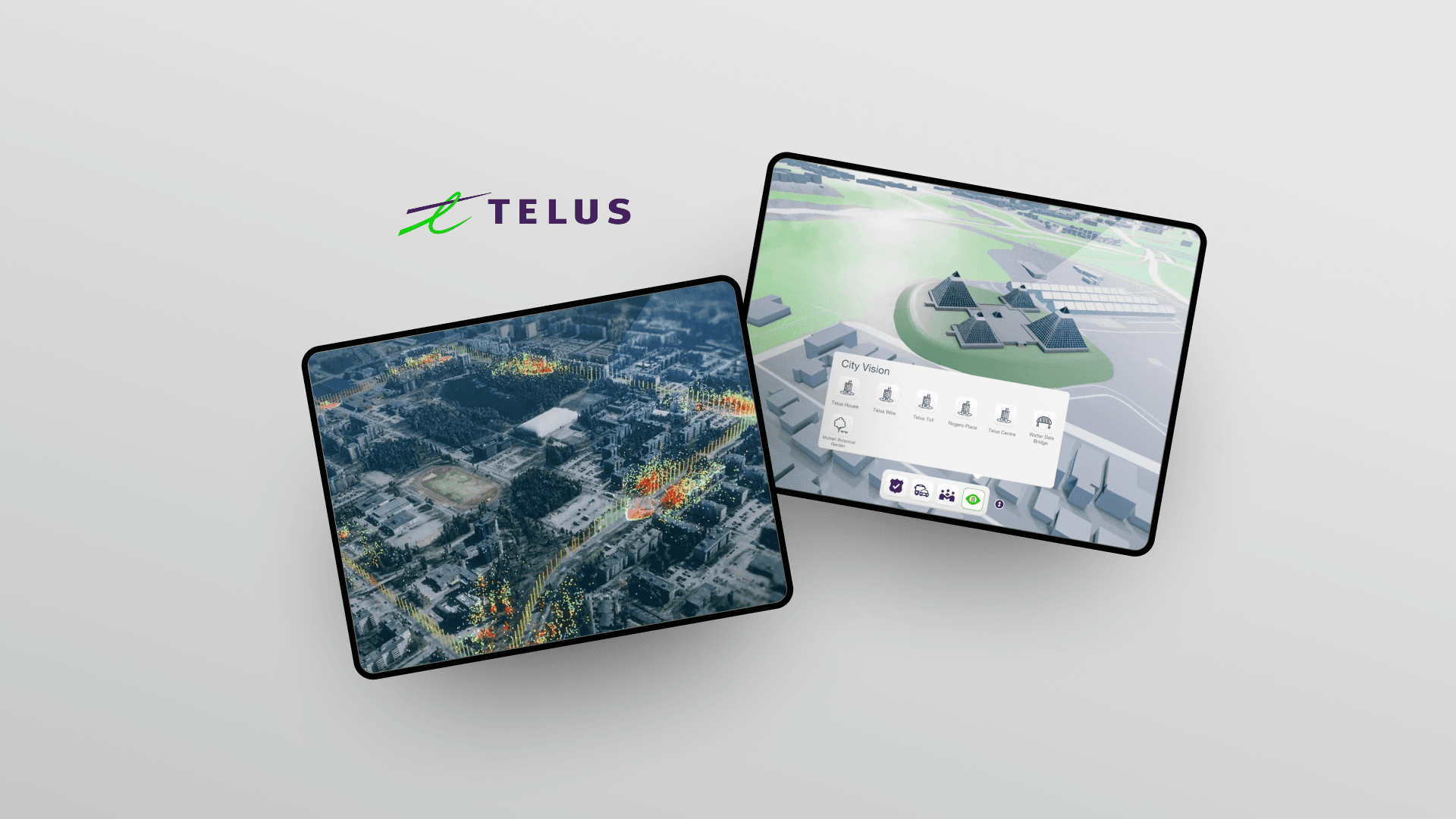
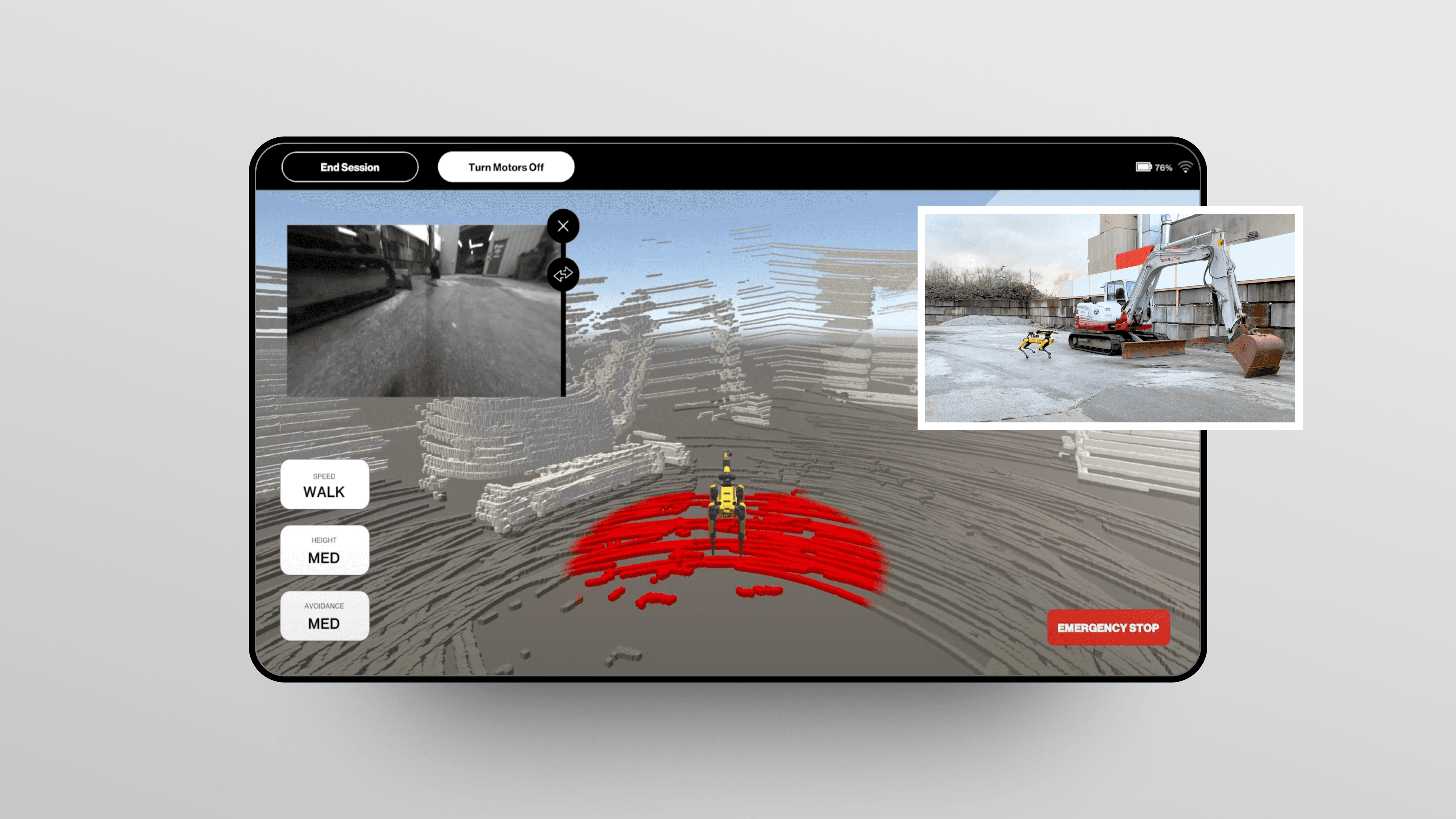
For this visionary product, we had a vast selection of advanced technologies to use as we see fit. A key area of our tech was the vast types of cameras and sensors that were used to track environments and create 3d renders in real-time. We included these detailed visualizations in the app to present to users what the Spot Robot Dog is seeing. Another feature was that we were able to trigger the robot to navigate itself to complete a maze, avoiding obstacles and using machine learning to achieve its goal.
Using this ability, a robot can set a safe path and follower robots can trail behind. Our app interface provided users to control or spectate a site operation and allow for automated tasks. Engineers were also developing ways of integrating remote control for big heavy machinery.
In app, unique views and abilities are available for Leader, Followers and Spectators. The Leader is the discovery machine, defining paths and mapping undiscovered areas. Follower machines autonomously complete tasks along the path while still having the option for manual override and the ability to switch to a Leader. Another app profile was dedicated for spectators to view real-time operation with log details and machinery information.
Key Processes
• Strategy Envisioning, Research and Team Collaboration
• User Flows & Wireframes
• Mockups and light Design System
Impact
This robotics project pushes the boundaries of automation, making precise tasks seamless in dynamic environments. Combined with machine learning and an intuitive interface, this was designed to integrate effortlessly into industrial workflows, improving efficiency, safety and reliability. Three key improvements to automated workflows were increased operational efficiency, reduced human error in high-precision tasks and enhanced user control and monitoring through a well-designed interface. As a result, this project demo was used in a successful bid to work with a top American telecom network.
01
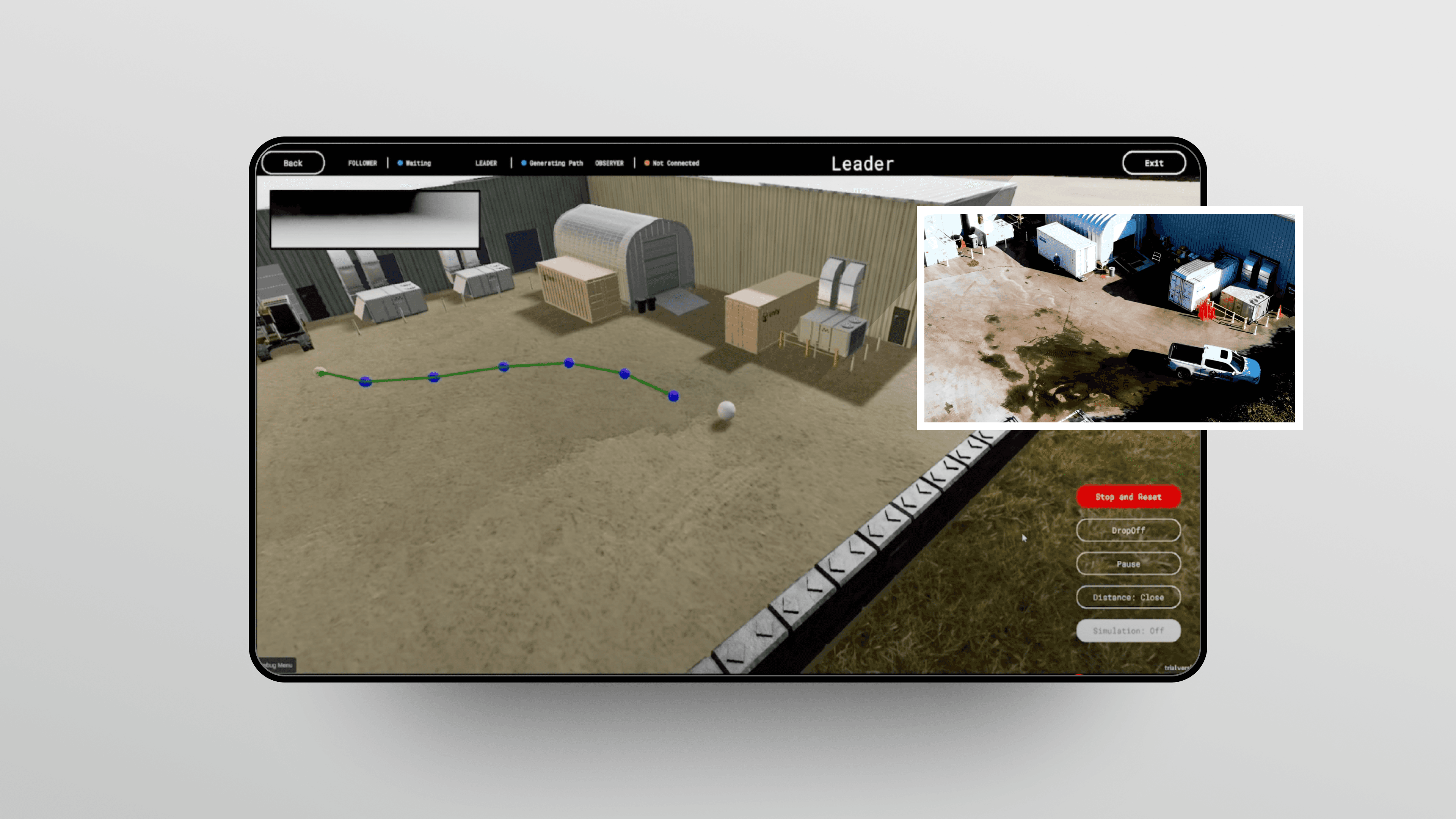
Once the area is mapped, the Leader robot sets a path.
02
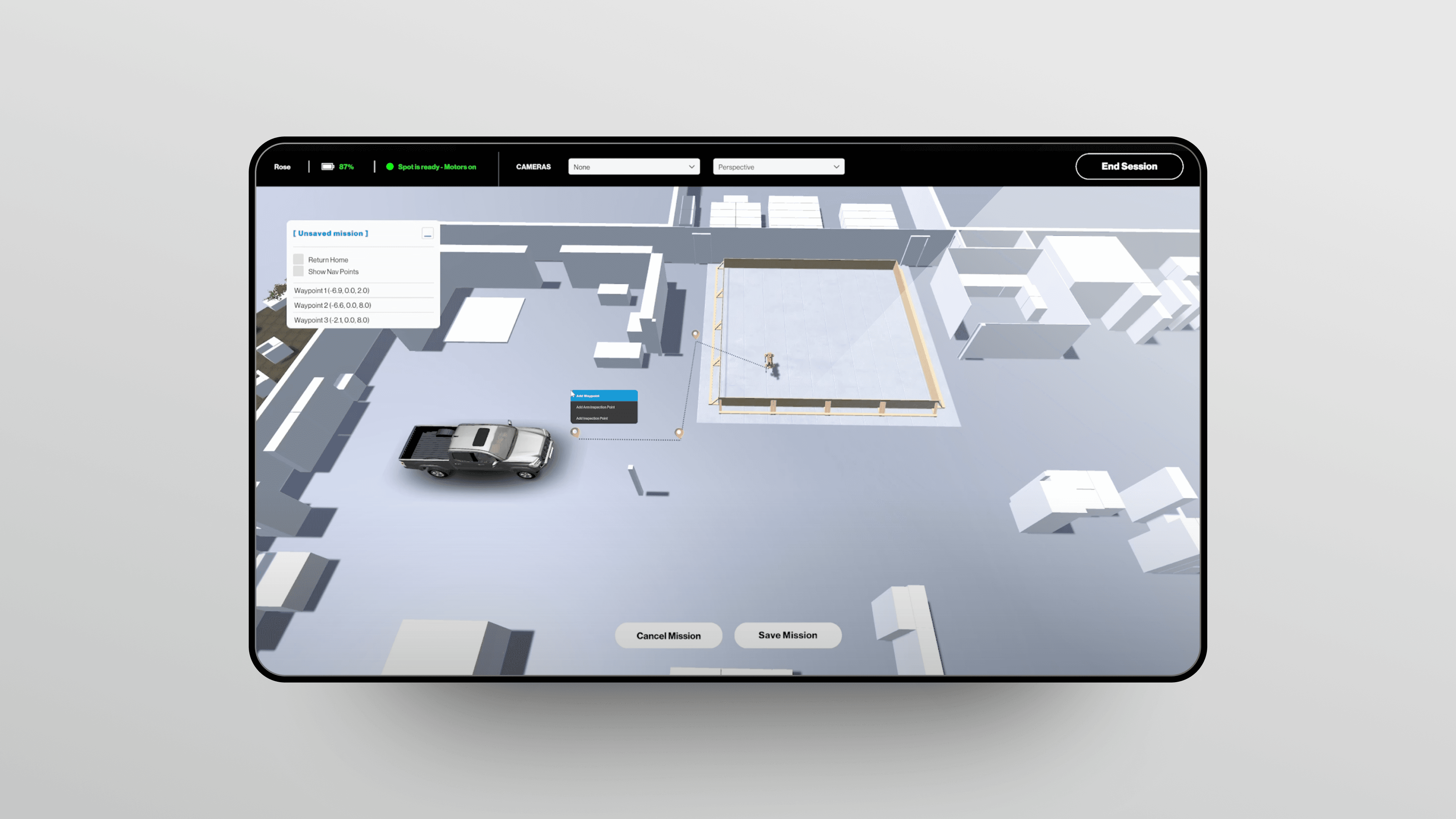
Paths can also be set and adjusted in app.
03
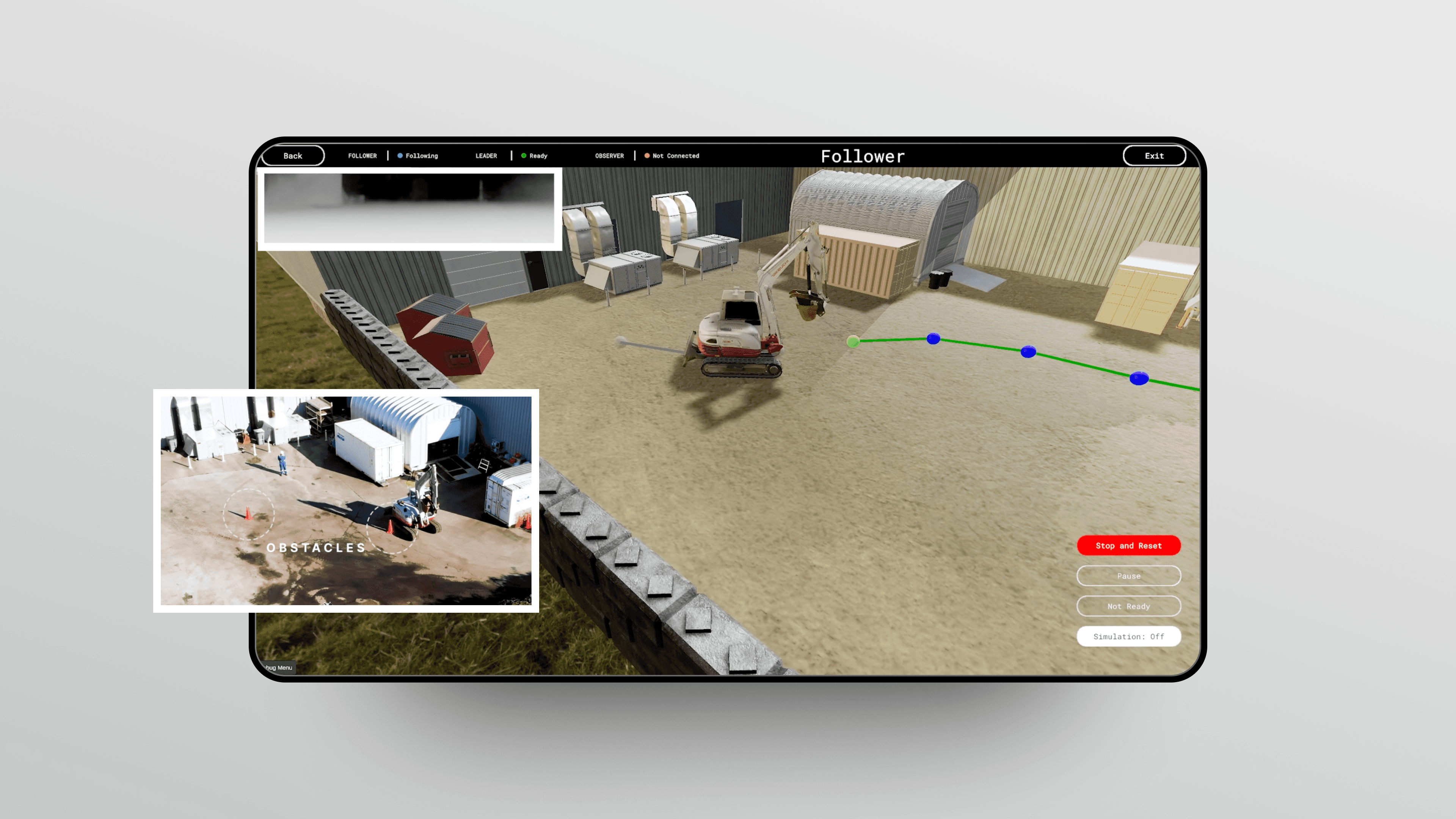
Follower robots track the path, performing tasks and avoid obstacles along the way.
more projects